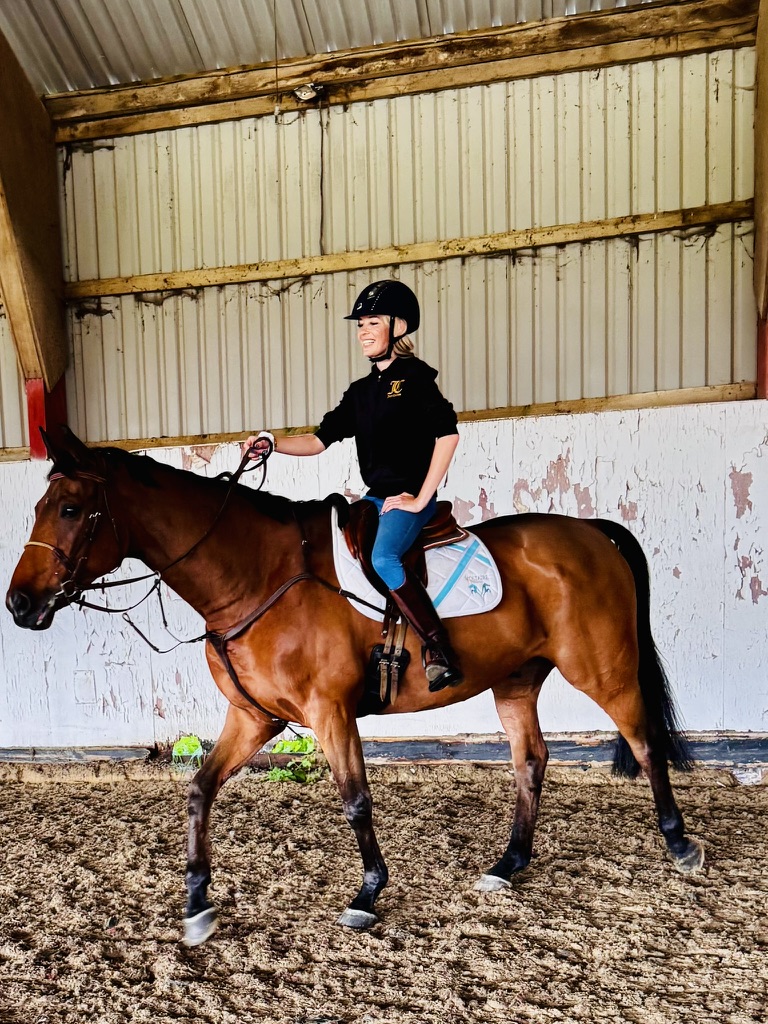
With January just around the corner, I've been thinking a lot about our training approach for the 2026 season. The Andalucia Sunshine Tour is only a few months away, and while the excitement is building, so is my focus on what we need to work on between now and then.
Here's the thing about DJ: he knows his job. He's competed at high levels, won six bars at 1.60m, and has more experience over fences than I could ever dream of. When we approach a jump, he knows exactly what to do. My job isn't to teach him how to jump—it's to put us in the right position for him to do what he does best.
The Rider's Responsibility
This is something I've been thinking about a lot lately. So much of show jumping success comes down to the rider's preparation, not the horse's ability. DJ has the talent. My responsibility is to:
- Find the right rhythm and maintain it
- See the distances and adjust accordingly
- Keep him balanced through turns and combinations
- Stay out of his way when he's doing his job
- Give him confidence through my own confidence
When things go wrong in a round, nine times out of ten it's because I've put us in a difficult position—wrong stride, unbalanced turn, or simply not trusting him to do his job. The best rounds happen when I ride every fence to a plan and let DJ execute.
What We're Working On
With that philosophy in mind, here's what our training looks like heading into 2026:
Flatwork & Rhythm
Everything starts on the flat. Before we even think about jumping, I need DJ moving forward in a consistent rhythm, balanced, and responsive to my aids. We work on transitions—walk to canter, canter to trot, lengthening and shortening within gaits. The goal is instant response and maintaining balance through every change.
Adjustability
Being able to lengthen and shorten DJ's stride is crucial for finding distances. We practice this on the flat and through grids—bounces, one-strides, and related distances that require us to add or leave out strides. The more adjustable he is, the more options I have when approaching a fence.
Grids & Gymnastics
Grid work is where so much of the magic happens. Bounces improve his quick reflexes and hind leg engagement. Related distances teach us both about striding. Gymnastics keep him supple, sharp, and thinking. We don't over-jump—quality over quantity—but regular grid work keeps his technique honest.
Turns & Lines
Jump-offs are won and lost in the turns. We practice riding accurate lines, maintaining balance through corners, and setting up for the next fence while still in the air over the previous one. I walk courses in my head constantly, visualising the track and where I need DJ's shoulders to be at every point.
Course Walking
This is all on me. Learning to walk a course properly—counting strides, identifying where to push forward and where to steady, spotting potential trouble spots—is a skill I'm constantly trying to improve. The plan needs to be crystal clear before I ever get on.
Mental Preparation
Horses feel everything. If I'm tense, DJ knows. If I'm confident, he knows that too. Part of my training is working on my own mental game—visualisation, breathing, staying calm under pressure. The best thing I can do for DJ is show up focused, relaxed, and ready.
The Season Ahead
January kicks off our build-up to Spain. We'll continue with local shows to keep DJ in competition mode, gradually stepping up the intensity as March approaches. The Royal Norfolk Show in June gives us another big target to aim for.
I'm not trying to change DJ or teach him anything new. I'm trying to become the rider he deserves—one who can consistently put us in the right place at the right time, and then trust him to do the rest.
That's the goal for 2026. Let's see where it takes us.
— Jasmine 🇬🇧🐴👧 x